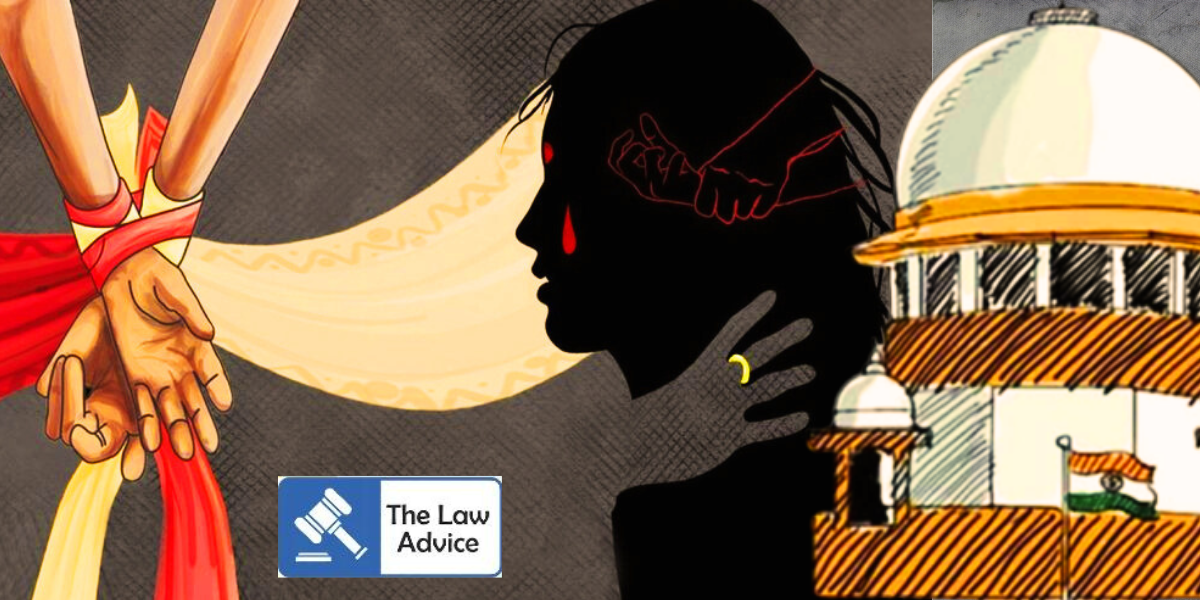
REVISTING THE MARITAL RAPE EXCEPTION IN INDIA: WHEN CONSENT IS SILENCED BY CUSTOM
Author: RUJULA KAPOOR | Date: 25 Jul, 2025
“A slap from your husband is not domestic violence. It’s tradition.”
These were the words whispered to a 26-year-old woman from Uttar Pradesh—by her own mother—when she tried to report repeated forced sex by her husband. The police dismissed her complaint. Why?
Because what happened to her—though clearly rape by any moral or constitutional standard—is not considered rape under Indian law.
The Hidden Epidemic
According to the National Family Health Survey-5 (NFHS-5):
-
1 in 3 married Indian women has experienced sexual violence by her husband.
-
That’s over 86 million women.
-
Yet not a single case can be registered as rape.
Why? Because Section 375 of the Indian Penal Code includes a “marital rape exception.”
Key Statistics:
-
32% of married women aged 18–49 reported physical, emotional, or sexual violence from their spouse.
-
Of those who reported sexual violence, over 95% said the perpetrator was their husband or ex-husband.
-
Yet, less than 1% of such cases are reported.
Source: The Tribune, 2025
The Legal Fiction of Marital Consent
Under Section 375 IPC:
“Sexual intercourse or sexual acts by a man with his own wife, the wife not being under fifteen years of age, is not rape.”
This outdated clause stems from colonial British law, based on the belief that a wife gives irrevocable consent upon marriage.
Ironically, Britain repealed this exception decades ago. But India, in 2024, still upholds it.
This Exception Violates:
-
Article 14 – Right to Equality
-
Article 21 – Right to Life and Dignity
-
Article 15(1) – Prohibition of Sex-Based Discrimination
India is among a shrinking list of nations—alongside Afghanistan, Iran, and Pakistan—that still fail to criminalize marital rape.
Imagine Her Reality
Imagine a woman—let’s call her Meena—who wakes up each day in fear. Her husband forces himself on her night after night, and the law says this isn’t rape.
Not because it wasn’t violent.
Not because she consented.
But because she said “I do” five years ago.
For millions of Indian women, this is not history—it’s happening today.
Judicial Cracks in the Wall
Independent Thought v. Union of India (2017)
The Supreme Court ruled that sex with a minor wife (under 18) is rape, even if married—partially invalidating Exception 2 to Section 375.
“A child remains a child, irrespective of her marital status.”
RIT Foundation v. Union of India (2022) – A Split Verdict
The Delhi High Court gave a split decision:
-
Justice Rajiv Shakdher: Declared the exception unconstitutional, calling it “steeped in patriarchy and misogyny.”
-
Justice C. Hari Shankar: Dissented, defending it as a legislative prerogative to uphold “the sanctity of marriage.”
The case is now pending before the Supreme Court.
But years later, we still wait.
How Courts Have Responded
Nimeshbhai Bharatbhai Desai v. State of Gujarat (2018)
-
Wife accused husband of oral, carnal, and unnatural acts, arguing it violated her bodily autonomy and dignity.
-
The court refused to recognize it as rape, though allowed Section 377 for unnatural offences.
Justice J.B. Pardiwala:
“It is time to discard the outdated notion of implied consent in marriage.”
Dilip Pandey v. State of Chhattisgarh
Court ruled that forced sex within marriage is not rape unless the wife is under 18.
Judgment strictly adhered to current legal standards.
Hrishikesh Sahoo v. State of Karnataka – A Ray of Hope
The High Court allowed prosecution under Section 376, saying:
“A woman is not the chattel of her husband. She has agency over her own body.”
— Justice Nagaprasanna
But even that trial?
The Supreme Court stayed it. No final verdict.
Just silence.
Justice Verma Committee: Ignored
After the 2012 Nirbhaya case, the Justice Verma Committee—a widely respected panel—recommended criminalizing marital rape.
The government rejected the recommendation, stating it would “destabilize families.”
But what about the women these families are crushing?
Global Contrast
Countries that have criminalized marital rape:
-
Nepal
-
South Africa
-
Bhutan
-
United Kingdom (via the 1991 R v. R judgment)
-
United States (all 50 states)
India continues to stand with theocratic regimes instead of constitutional democracies.
Personal Insight & The Way Forward
As a law student, and more importantly, as a citizen with a conscience, I find it unbearable that we chant “Beti Bachao, Beti Padhao” while shielding sexual violence inside the home.
If a married woman cannot legally say “no”, then what dignity are we protecting?
If marriage overrides consent, then marriage becomes a license to violate.
Solutions:
-
Repeal the Marital Rape Exception
-
Strike down Exception 2 to Section 375 IPC (now Section 63 of the Bharatiya Nyaya Sanhita, 2023).
-
It creates a constitutional contradiction, denying married women equal protection.
-
-
Create a Specific Law
-
Enact a clear legal provision criminalizing non-consensual sex in marriage.
-
Include safeguards like in-camera trials and evidentiary standards to protect both rights and due process.
-
-
Sensitize Stakeholders
-
Train police, judges, and communities to recognize that marriage does not erase bodily autonomy.
-
Final Words: A Question for the Lawmakers
“If a woman’s consent matters before marriage, and it matters outside marriage, why does it vanish the moment she becomes a wife?”
The Constitution doesn’t promise justice for the unmarried.
It promises justice for all.
Until the law reflects that truth, no Indian woman is truly free—and no Indian man is truly equal either.

